- International school
- 2026.1.29
How much does an international school cost? How to choose and avoid regrets.
My friend’s child is fluent in English… Now that I’m feeling anxious, I want to know the value of international schools
The growing interest in international schools stems from the earnest desire of parents that one English conversation lesson per week is not enough.
Let’s think about the value of an educational environment that goes beyond simple language learning and maximizes children’s future potential.
Why English conversation classes alone are not enough
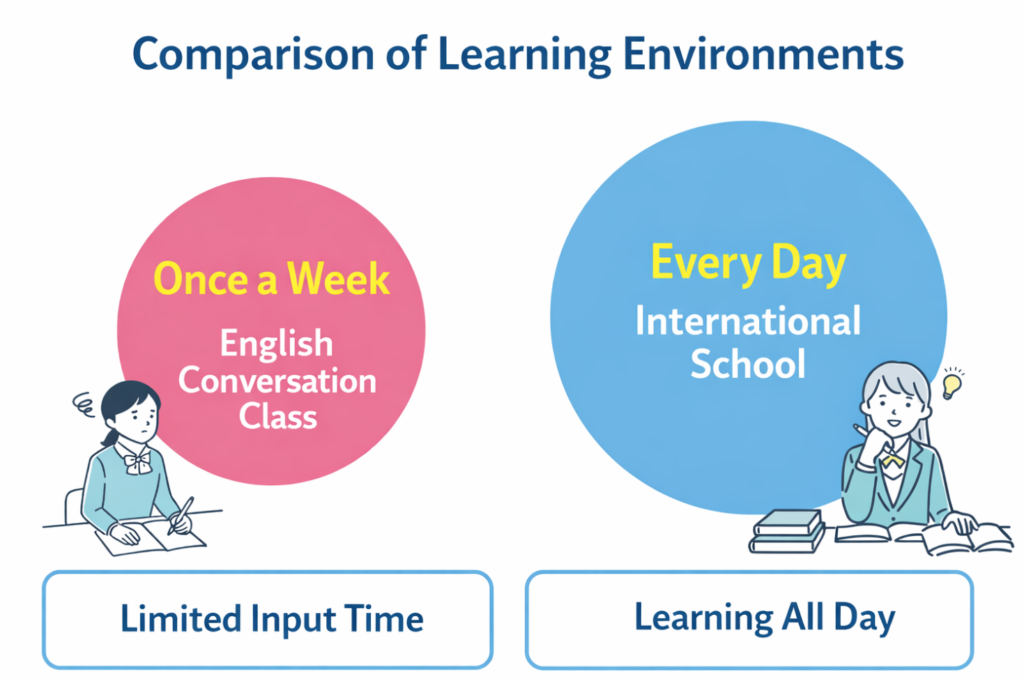
Even if you attend English conversation classes once a week, you may not feel that your English is improving as much as you expected because you are not spending enough time in contact with English. In order to acquire a language, it is essential to have opportunities to actually use the language you have learned (output).
However, opportunities to learn English are limited within lessons alone. For example, even if you learn the word “Apple” in the classroom, there will be few situations where you can use it in daily conversation. The immersion education offered by international schools, where English is the only language used, makes a big difference in developing practical English skills.
Why “real English skills” are important for your child’s future
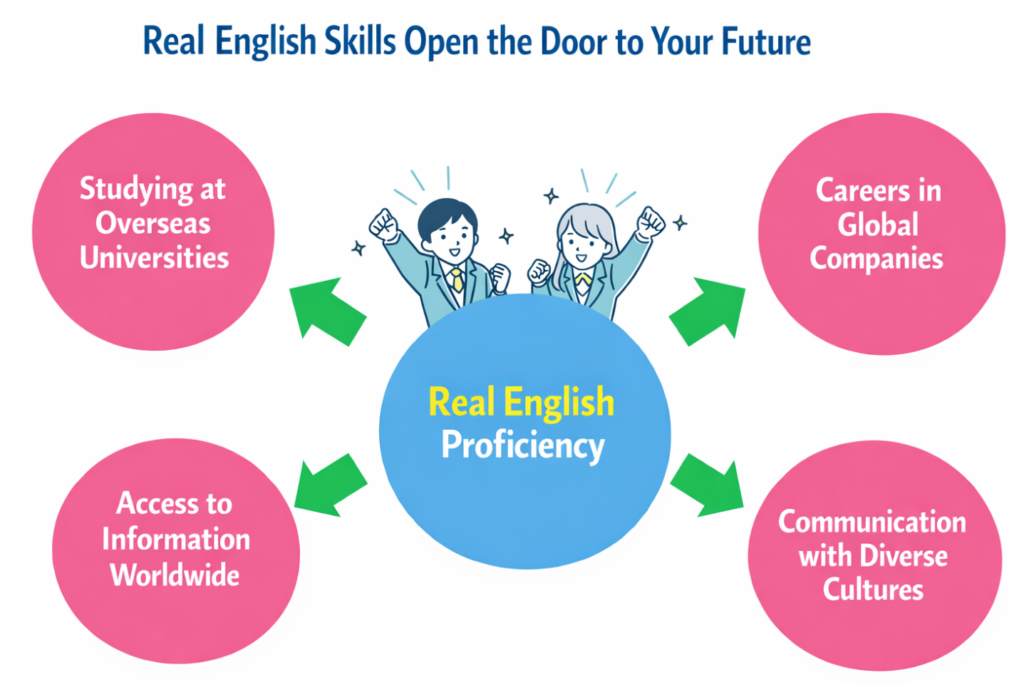
For children to be successful in the society of the future, it will be essential not only to be able to speak English, but also to have the ability to think and express themselves in English, as this will be a powerful tool that will greatly expand their future educational and career options.
For example, its true value is demonstrated in situations that require advanced thinking skills, such as studying a specialized field at a university overseas or discussing with a multinational team on an international project. Genuine English ability is not just about test scores; it is like wings that allow children to realize their dreams and spread their wings on the world stage.
Why parents choose international schools despite the high costs
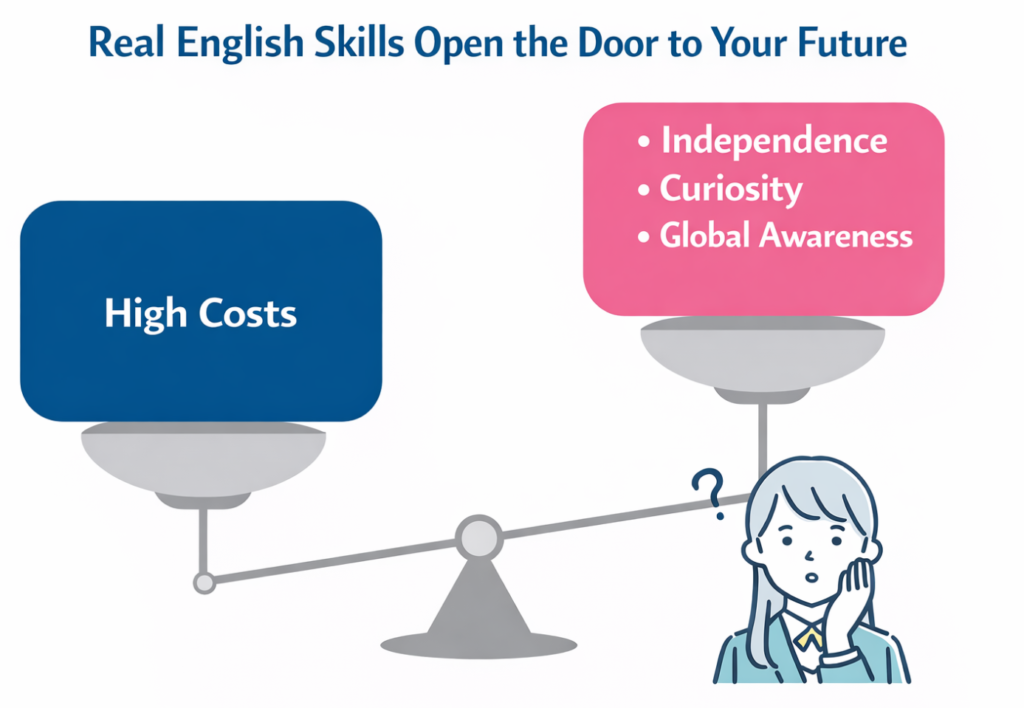
Many parents choose international schools, even if it means paying high tuition fees, because they see value in more than just English education. Behind this is a resonant educational philosophy that goes beyond simply cramming knowledge into children, respecting their own “why” and fostering their ability to think things through for themselves.
For example, instead of one-sided lessons, students engage in discussions with each other and work on project-based learning. Through these experiences, students develop the independence and critical thinking to tackle problems that have no clear answers. This can be thought of as an investment in children’s intellectual property that will last a lifetime.
[Tuition List] How much does an international school cost in total? Breakdown and comparison of domestic and international rates
Tuition fees at international schools are one of the most important concerns. While they vary depending on the school and region, here we’ll give you a realistic idea of the costs by comparing specific breakdowns and domestic and international rates. Understanding the total cost in advance is the first step in planning your educational finances.
Over 3 million yen per year? Full breakdown of costs including tuition, admission fees, and facility fees
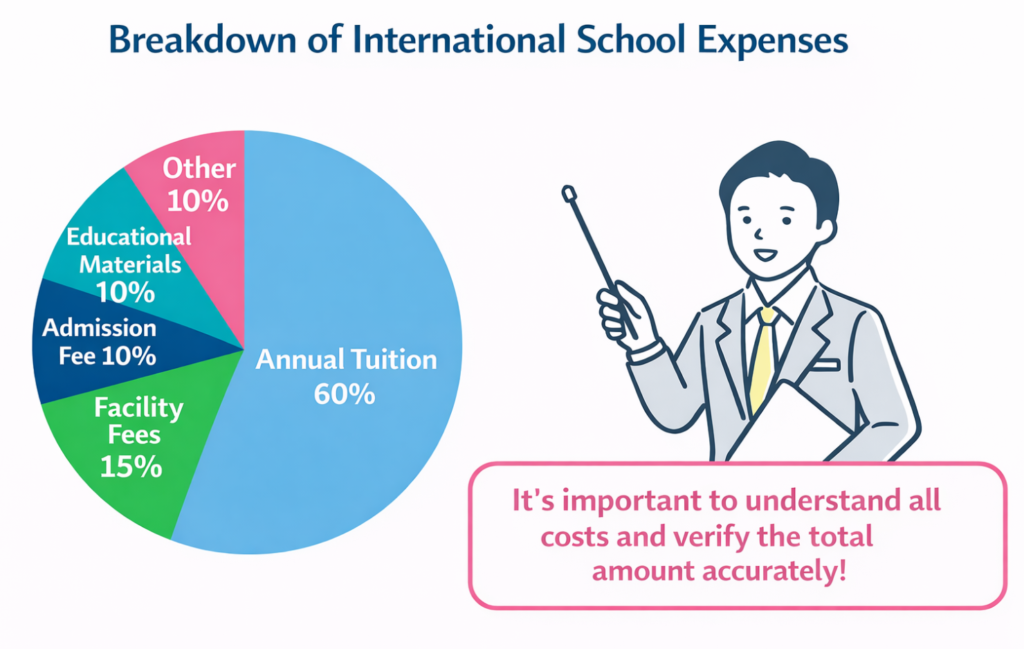
When considering the cost of international school, if you only look at the “annual tuition fees” listed on the website, you may be surprised at the difference from the actual total cost.
Generally, tuition fees are around 1.5 million to 3 million yen, but in addition to this, an admission fee of 200,000 to 500,000 yen is required in the first year. There are also separate fees for facility usage, teaching materials, school bus fares, lunch fees, uniforms, etc. Adding all these expenses together, it is not uncommon for the total to exceed 3 million yen per year.
First, it is important to make a list of all expenses other than tuition fees and accurately determine the total amount you will need.
List of tuition fees by age from preschool to high school
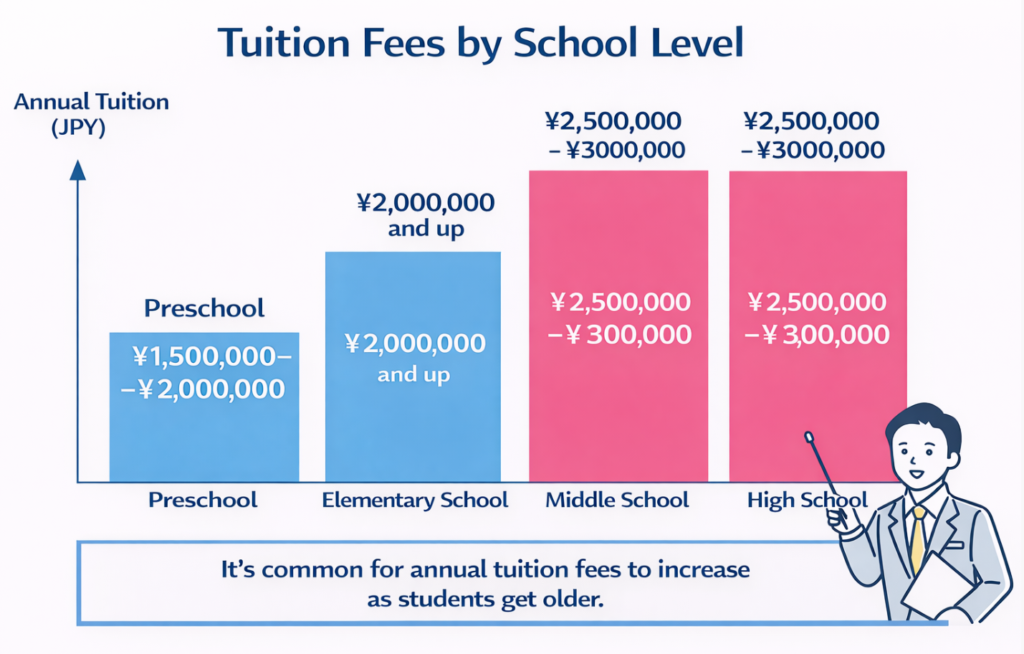
Tuition fees at international schools generally increase as children get older, as they require more specialized teachers and more advanced laboratory equipment and teaching materials.
For example, the average cost for preschool is around 1.5 million to 2 million yen per year, but for elementary school it can be over 2 million yen, and for junior high school and high school it can be 2.5 million to 3 million yen or more.
If you plan to continue sending your child to school after they advance to higher education, it is important to make financial plans from a long-term perspective and anticipate increases in costs with each grade in order to reduce the burden on your household finances in the future.
Comparing the costs of international schools with private and public schools in Japan
The reasons why international schools are said to be expensive become clearer when compared to other options.
According to a survey by the Ministry of Education, Culture, Sports, Science and Technology, the total annual tuition fee for public elementary schools is approximately 350,000 yen, and for private elementary schools it is approximately 1.67 million yen. In contrast, the average annual tuition fee for international schools exceeds 2 million yen, and is even higher when miscellaneous expenses are included. This difference reflects the costs of maintaining a high-quality educational environment, such as realizing small class sizes, securing native teachers, and introducing an international curriculum.
This will be an important comparison point when discussing with your family which educational environment you value and want to invest in.
What are the tuition fees for international schools and boarding schools in Malaysia, which are attracting attention as a source of educational migration?
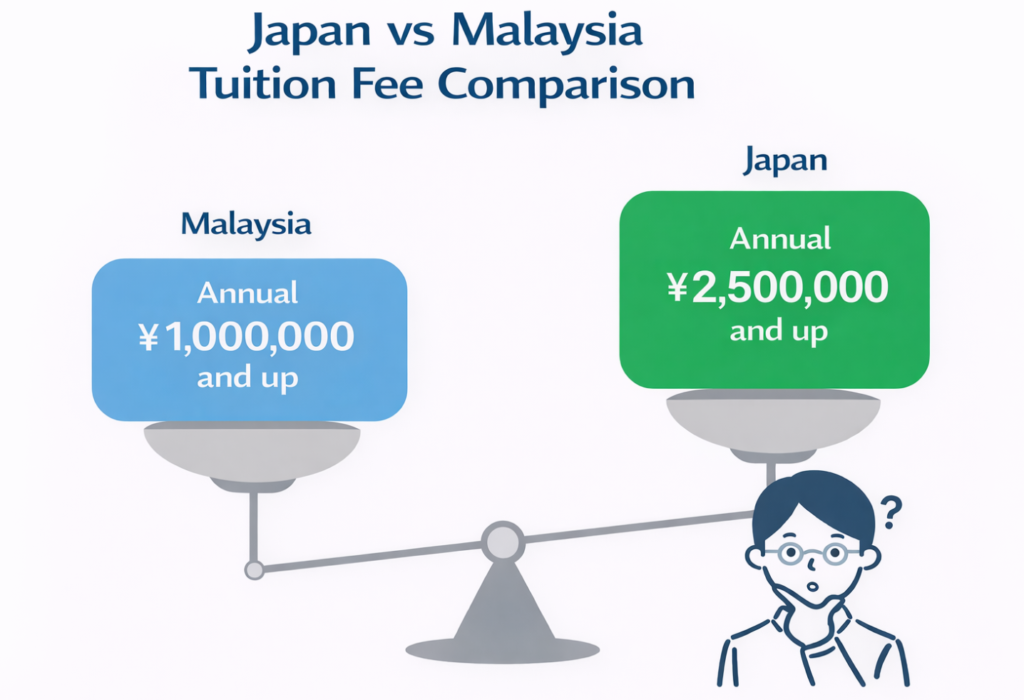
In recent years, an increasing number of families are turning their eyes to overseas education options. Malaysia in particular is a popular destination for educational migration, as it offers high-quality British-style education at a relatively low cost.
While tuition fees at international schools in Japan cost over 2.5 million yen per year, there are many schools in Malaysia where you can receive a similar level of education for around 1 million to 1.5 million yen per year. Even boarding schools where students live in dormitories can cost around 2 million to 3 million yen per year in tuition and dormitory fees, which is the same or even lower than the cost of a Japanese day school.
This is due to factors such as differences in prices and government policies to attract businesses.
Three ways to reduce the burden of tuition fees: scholarships, student loans, and government support programs
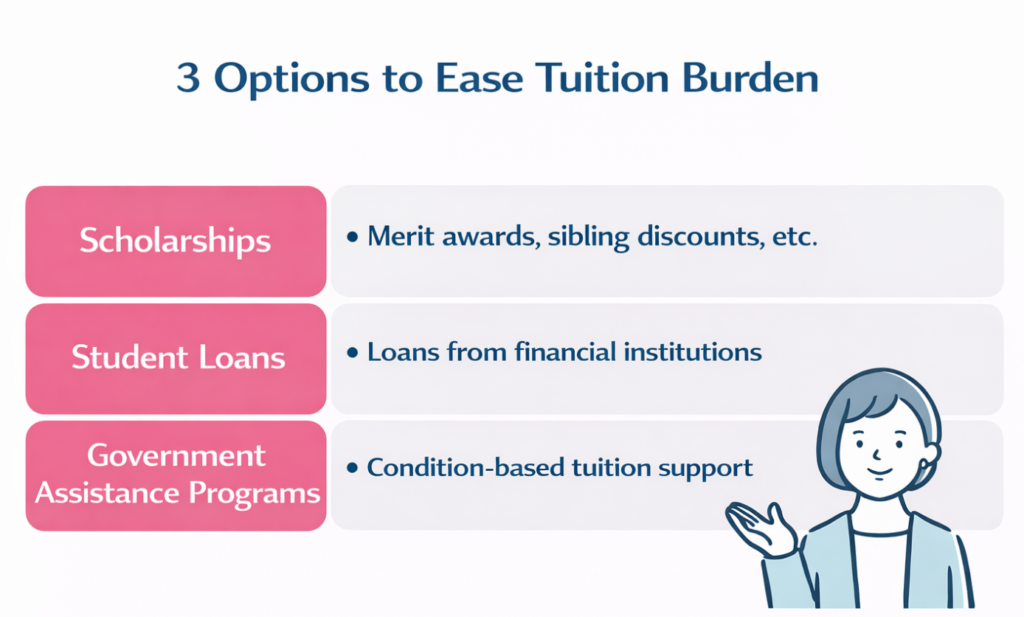
High tuition fees are a major hurdle, but there are systems in place to help alleviate the burden. The first thing you should consider is the school’s own scholarship system. There are programs for students with excellent grades and discounts that apply to students with siblings.
Another option is an “education loan” offered by financial institutions. While you will need to create a solid repayment plan, it can be useful for preparing a large amount of funds.
In addition, some schools that have been recognized by the Ministry of Education, Culture, Sports, Science and Technology as being accredited by international evaluation organizations (WASC, CIS, ACSI, IB) may be eligible for tuition support for high school students, etc. Before giving up, try to gather information to see if there are any systems available to you.
Will you regret your decision based solely on tuition fees? The pros and cons of international schools
Even after overcoming the major challenge of tuition fees, it is important to determine whether it is truly the best choice for your family and your child. While there are great benefits, there are also disadvantages that you should be aware of. Make sure you understand both sides thoroughly and make a choice you will not regret.
Benefits: An environment where you can acquire overwhelming English skills and an international perspective
The biggest advantage of attending an international school is that it allows students to naturally acquire native-level English skills in an environment where everything, from classes to conversations with friends, is in English. Rather than “studying” vocabulary and grammar, students develop the ability to use real English as a tool through activities like science experiments and historical discussions.
Furthermore, by interacting with students and teachers of various nationalities on a daily basis, students will experience firsthand the diversity of cultures and values, and will naturally develop an accepting attitude. This experience will be an invaluable asset for them as they play an active role on the global stage in the future.
Benefits: Inquiry-based learning that fosters independence and critical thinking
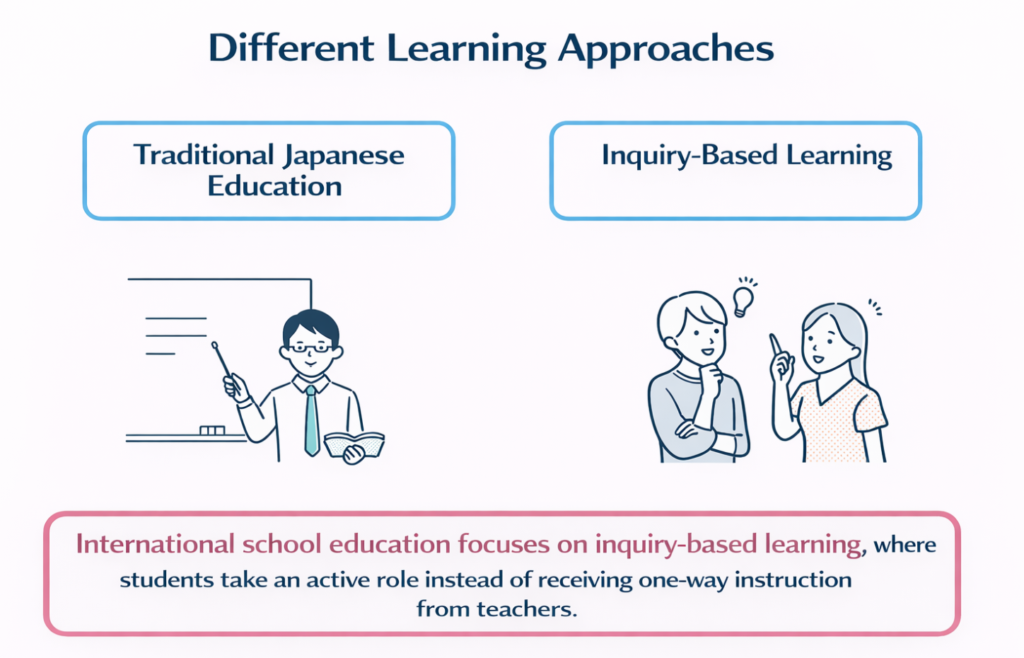
Education at international schools is centered around an inquiry-based approach, where students learn independently, rather than being taught unilaterally by teachers.
For example, students will work on a project on the theme of “environmental issues,” identifying issues, researching them, and then holding group discussions to present solutions. Through this process, students will not only memorize knowledge, but also ask questions like “Why does this happen?” and “Is there a better way?”and thingsThis will help you develop your ability to look at things from multiple angles and think deeply, or what is known as critical thinking.
The ability to have your own opinion and communicate it logically will be extremely important for surviving in the future.
Disadvantages: Opportunity to maintain Japanese language skills and learn about Japanese culture
While children are immersed in an English environment, if they are not careful, their Japanese vocabulary and reading and writing skills may not improve as they age. Support at home is especially essential for developing words that express abstract concepts and the ability to read and understand complex sentences. Many schools offer Japanese language classes, but this alone may not be enough.
In addition, children tend to have fewer opportunities to come into contact with Japan’s seasonal events and traditional culture. It is important to make efforts to help children develop their native language and culture, which are the foundation of their identity, by consciously reading Japanese picture books at home and participating in local events.
Disadvantages: Situations where parents’ English skills and active involvement are required
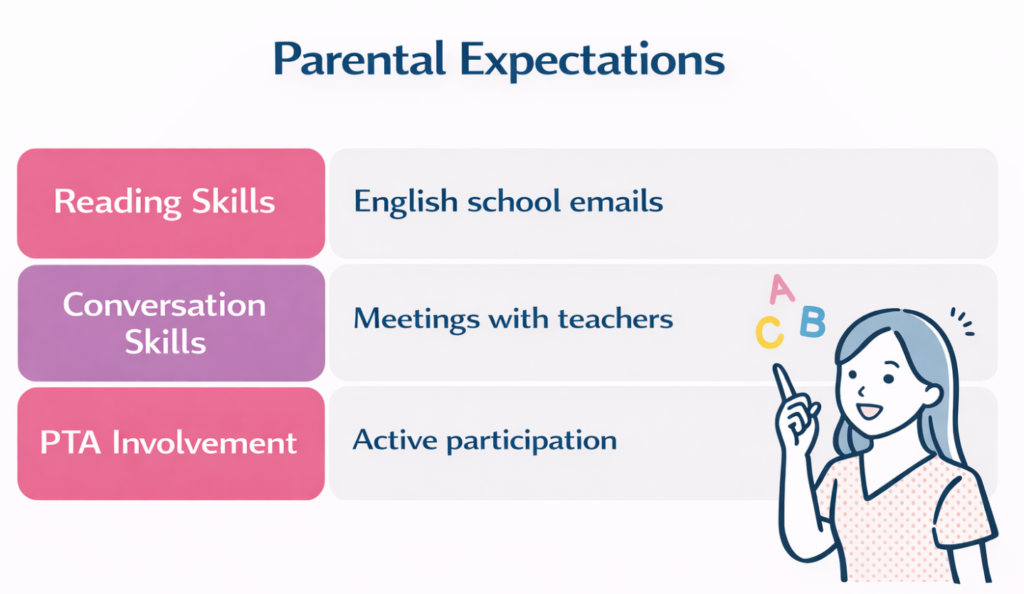
At international schools, it is standard for all school announcements and handouts to be in English. Individual teacher interviews and parent-teacher meetings are also conducted in English, so parents are expected to have a certain level of English proficiency. While perfection is not required, it is preferable for parents to be comfortable communicating in English in order to accurately understand their child’s learning situation and communicate smoothly with the school.
Furthermore, in schools with a Western cultural background, parents are often expected to be actively involved in the running of the school through volunteering, which can require a time commitment.
Which school is best for my family? 7 checklists to help you avoid regrets
Although the term “international school” is used in general, there are many different educational policies and curricula. Here are some specific checkpoints to help you find a school that truly suits your child and matches your family’s policies from the many options available.
First, check the educational policy. Does it match the values of your family?
The most important thing when choosing a school is whether the school’s educational policies and philosophy match your family’s values regarding education.
For example, does the school have a culture that emphasizes academic achievement and encourages competition, or one that respects the individuality of each child and supports their free and easy growth? This is often difficult to determine from a website or brochure alone. We encourage you to attend a school information session or open school and listen directly to the principal and teachers. You will surely be able to see what the school values from the words of the teachers and the way they interact with your child.
Comparing Curricula: The Importance of Certifications such as the International Baccalaureate
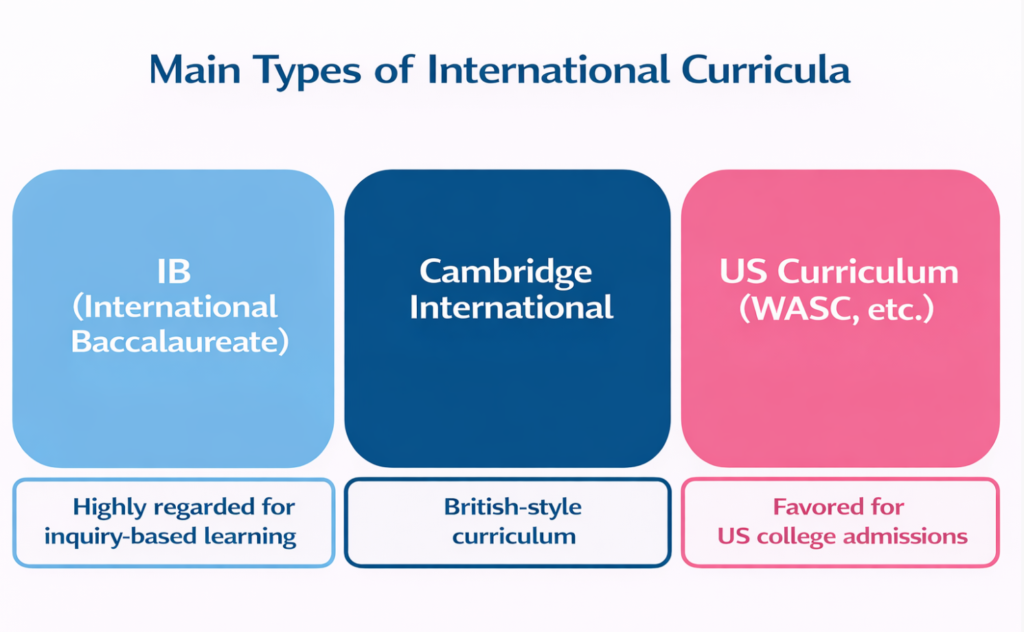
The type of curriculum adopted is an important point that directly relates to the quality of your child’s learning and their future career path. Representative globally recognized curriculums include the International Baccalaureate (IB), the UK’s Cambridge International Curriculum, and the American-style AP.
These accredited schools are guaranteed to provide educational quality that meets international standards. In particular, if you are considering going to a university abroad in the future, be sure to check whether you can complete a curriculum that is recognized as a university entrance qualification (such as the IB Diploma or A-Levels).
It is important to choose a school that offers the best curriculum for your child’s age and future goals.
What are the world-standard international qualifications “IGCSE” and “A-Level” that Nisai also uses?
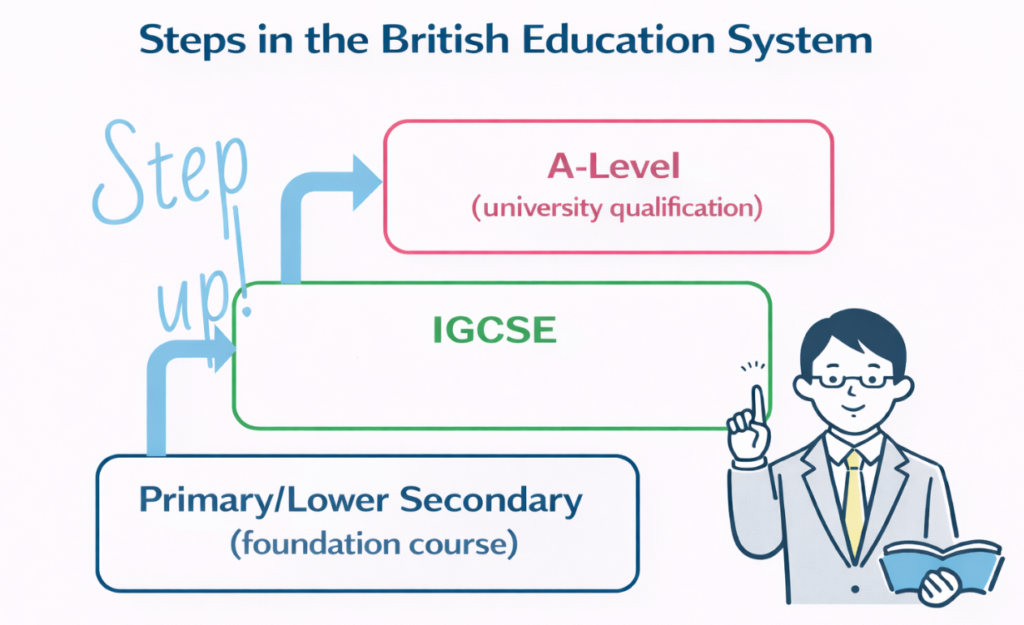
The core of the Cambridge International Curriculum mentioned earlier is the international qualifications “IGCSE” and “A-Level”.
IGCSE is for students aged approximately 14 to 16, and is equivalent to the completion of compulsory education in the UK. It is one of the most widely accepted international qualifications in the world. The subsequent A-Level is for students aged 16 to 19, and is a course that delves deeper into the foundations of specialized fields studied at university. It is recognized as a qualification for admission to universities in the UK and around the world.
We at Nisai have adopted this curriculum because of its high quality and international applicability. By striving to obtain these qualifications, your child’s academic ability will be verified at a global level, broadening their future options.
How much does it cost to commute to school? Check the location and whether or not there is a school bus.
Because it is something that happens every day, the burden of commuting to school cannot be underestimated.SchoolCheck how far the location is from your home and whether it’s easily accessible by public transport.
Long commutes to school can be a significant burden, especially for young children. Many international schools operate school buses that cover a wide area. Be sure to check the bus routes, bus stop locations, and of course the cost in advance.
Being able to continue attending school safely and comfortably is an important foundation for a comfortable school life.
How to research reviews and reputations from parents who actually send their children to the school
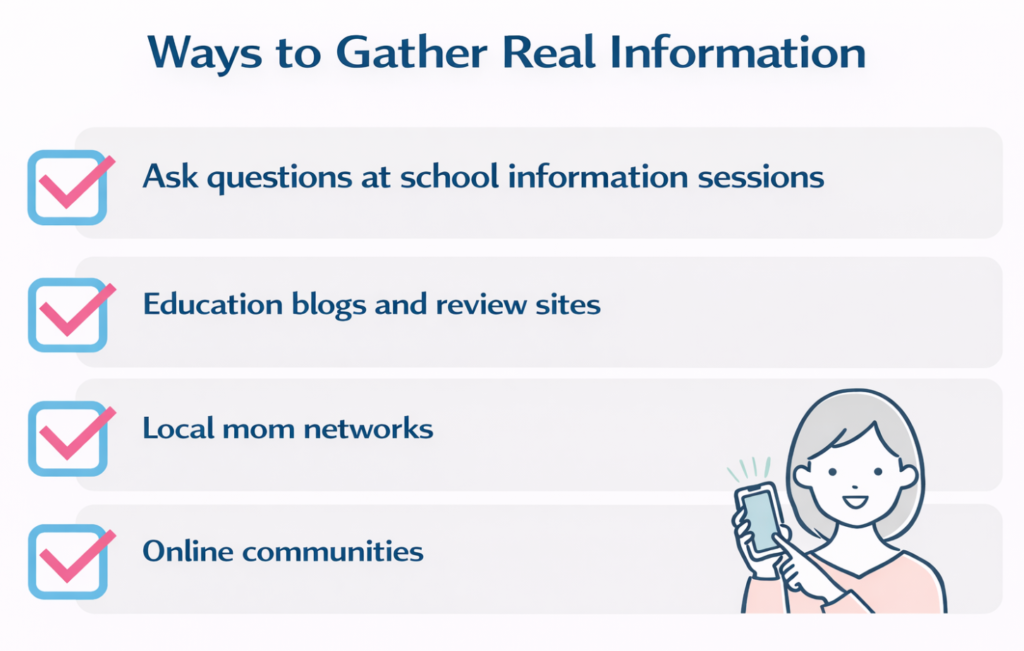
In addition to official information, the “real voices” of parents who actually send their children to the school are extremely valuable in understanding the actual situation at the school. If you have the opportunity to talk to parents of current students when attending a school information session or tour, be sure to actively ask questions.
Educational blogs, review sites, and social media communities can also be helpful. However, because much of the information on the internet is personal opinion, it is important to treat it as a reference only and compare multiple sources of information. Ultimately, the key to avoiding regrets is to trust and make decisions based on what you see, hear, and feel with your own eyes and ears.
A new option for high-quality education while keeping tuition costs low: online
We’ve looked at various aspects of international schools, but many people feel that tuition fees are the biggest obstacle. However, it may be too early to give up. In recent years, “online international schools” have been gaining attention as an option to solve the problems of on-campus schools.
The appeal of online international schools: Easy to start without commuting to school
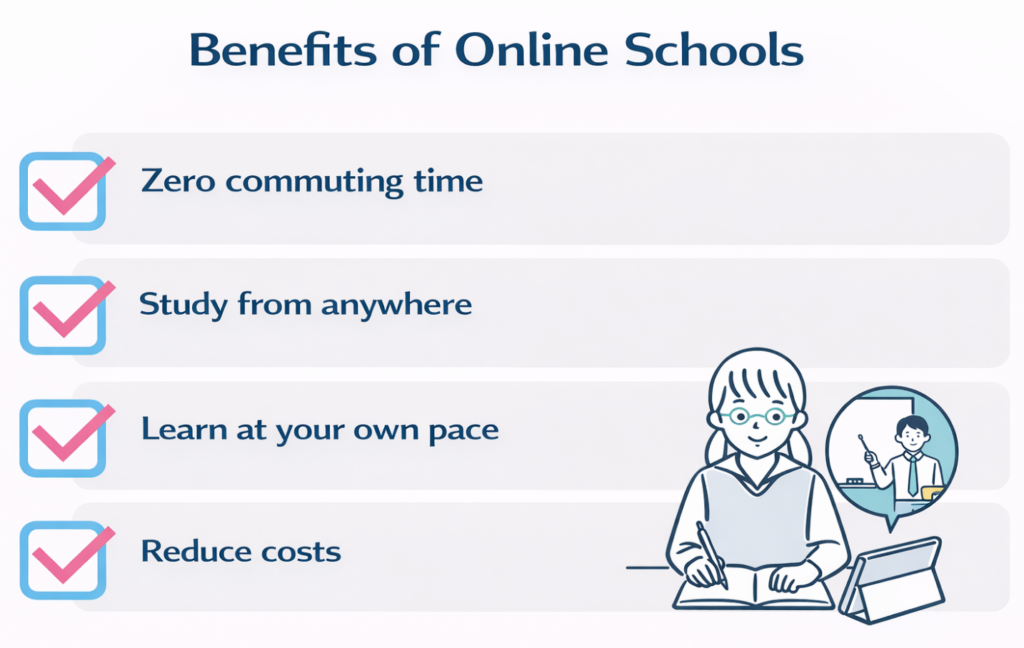
The biggest appeal of online international schools is that they do not have physical constraints. Because there is no need for daily transportation or long commutes, both children and parents can use their time and energy more effectively.
Another major benefit is that even if you move frequently due to family circumstances, you can continue your studies without interruption. Furthermore, your own room becomes a classroom that connects you to the world, allowing you to concentrate on your studies in a relaxed environment.
In this way, for families where attending a regular school is difficult due to geographical or time constraints, online education is a very realistic option that opens the door to high-quality education.
Compare online international schools with on-campus schools! Tuition fees and features
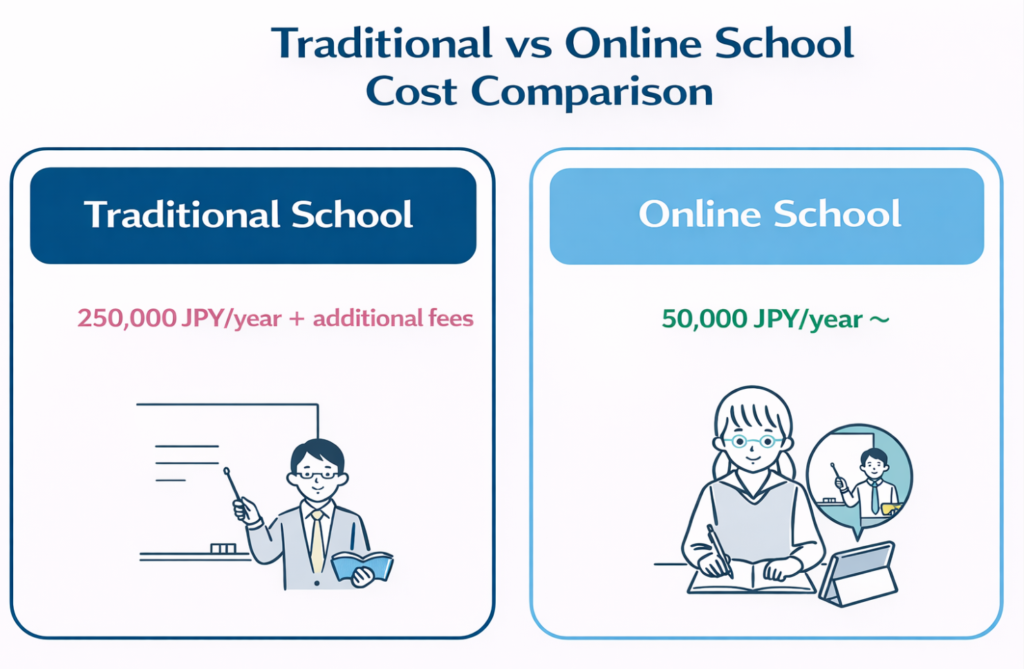
Another major advantage of online international schools is cost. Because they do not require the large campuses and facilities of on-campus schools, the cost is reflected in the tuition fees, which are relatively low.
Generally, tuition fees for on-campus schools cost over 2 million yen per year, but online courses can often cost around one-third to one-quarter of that amount, depending on the program, significantly reducing the financial burden.
For families who have given up on international schools due to the high tuition fees, online education is a groundbreaking option that allows them to combine high-quality international education with consideration for the household budget.
High-quality lessons by Nisai’s native teachers with over 25 years of experience
When you hear the term “online,” some people may worry about the quality of the lessons. We at Nisai are pioneers who have been providing online education for over 25 years. All lessons are taught by licensed, experienced, native-speaking teachers.
Not only do they speak English, but they also receive specialized training to capture students’ interest and guide them to deep learning in an online environment.With established teaching methods and interactive lesson development, they deliver high-quality, personalized education that is possible even online, or perhaps because of it.
Nisai’s global learning environment where students from all over the world can learn together
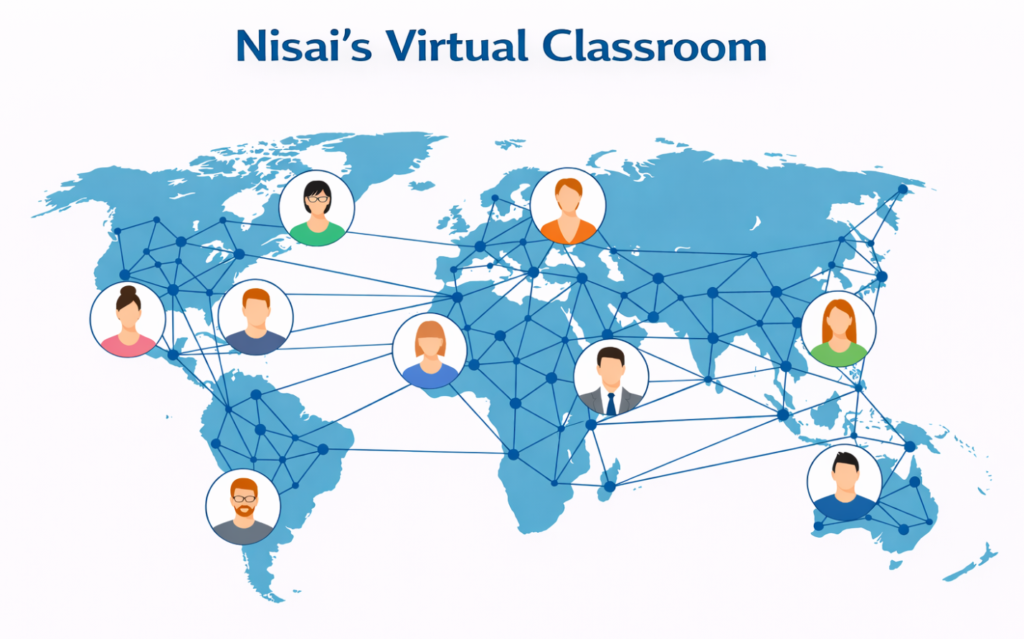
Nisai’s classrooms are literally all over the worldOpened toStudents can study together with students from various countries and regions, including Asia, the Middle East, and Europe, in addition to Japanese students. This is a truly global environment that is difficult to find even at a typical international school in Japan.
Through group work and discussions, children are greatly inspired by the opinions of their peers who have completely different cultural backgrounds. This experience will be an excellent learning experience for them in terms of accepting diversity and cultivating an international perspective. One of the unique attractions of Nisai is that you can make friends from all over the world without leaving the comfort of your own home.
Nisai’s courses and study plans available for elementary, junior high, and high school students based on their goals
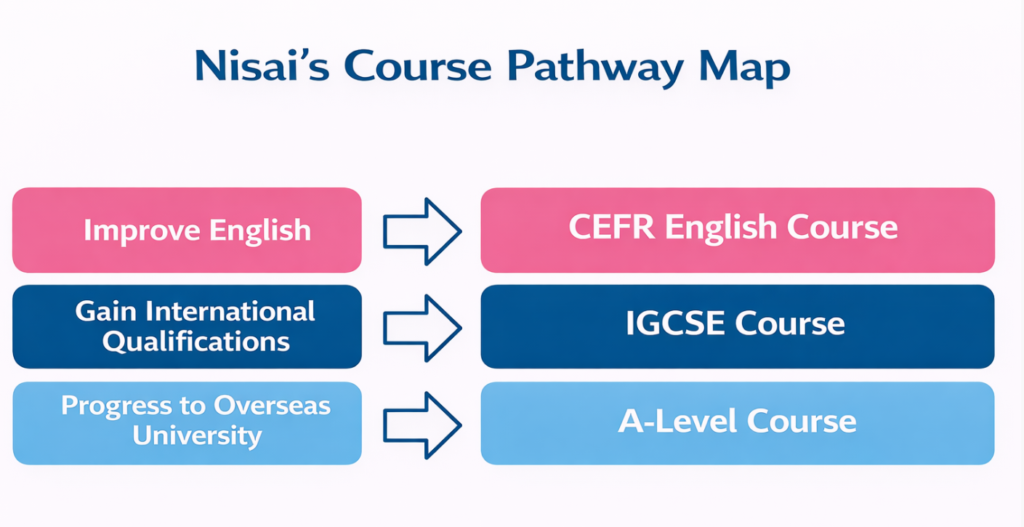
We offer a wide range of courses to suit each child’s age and learning goals, from full-scale preparatory courses aimed at obtaining international qualifications such as IGCSE and A-Level, to courses that thoroughly improve the four English skills in line with the international standard known as the CEFR, to short-term study abroad programs.
We also offer flexible customization of the learning pace and number of subjects. One of Nisai’s greatest strengths is our ability to design an optimized learning plan for each child based on their current English ability and future dreams. First, let us know your child’s goals.
Take the first step now to maximize your child’s potential
We have provided you with a wide range of information, but the most important thing is to find the best choice for your child and your family. Don’t just gather information; why not take the next step?
Tips for creating an English environment, starting with what you can do at home
Before considering a formal school, there are many things you can do at home. For example, you can start by reading English picture books to your child, or enjoying English songs and anime for children together.
The important thing is not to force English on children as a “study,” but to incorporate it into their daily lives as something fun. Even just changing the language setting on your smartphone to English or exchanging simple greetings in English can be a fresh stimulus for children.
These small steps will help spark your child’s interest in English and provide a smooth transition to serious learning.
Resolve your concerns and questions here! How to utilize Nisai’s support
Have you ever felt overwhelmed by the amount of information and not knowing where to start? That’s when we at Nisai offer a full range of support services.
Our support staff do more than just guide you through courses. Our specialized team will accompany your child based on their individuality and goals, answering questions like, “Is online learning suitable for my child?” and “Which course should I choose to help them achieve their future dreams?”, and even helping them develop long-term study plans with an eye toward attending a university abroad.
Nisai’s free individual consultation is a time to turn your vague anxieties into concrete next steps. No matter how trivial the matter, please feel free to contact us.
Get a feel for the real atmosphere through online information sessions and trial lessons
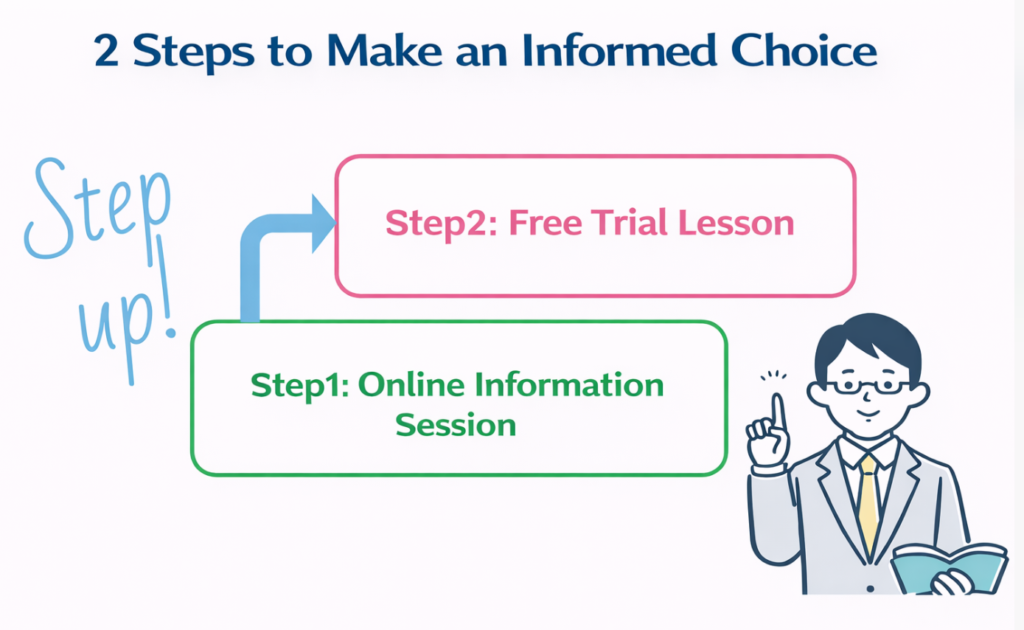
Ultimately, the most important thing to consider is whether your child likes the learning style. Many online schools offer information sessions for parents and free trial lessons where your child can sit in on a class.
At Nisai, we also provide opportunities for you to experience the atmosphere of our actual classes. You can deepen your understanding of the curriculum and support system at our information session, and check whether your child can enjoy interacting with the teacher and classmates at our trial lesson.
Seeing is believing. Experiencing the realistic atmosphere is the quickest way to make a decision you won’t regret.
Summary
This article provides a detailed explanation of international school tuition fees, including their breakdown, domestic and international averages, and ways to reduce the burden. While tuition fees, which can exceed 3 million yen per year, are a significant burden, many parents invest more in the value they gain from the benefits: genuine English skills and an education that fosters independence. It’s important not to base your decision solely on tuition fees, but to identify a school that best suits your family’s educational philosophy and your child’s characteristics. In addition to in-person classes, consider online schools, which offer a world-class education at a lower cost. We hope this article helps you choose the best education for your child.
FAQ
-
How much annual income do parents need to send their children to an international school?
-
It depends on the family's lifestyle, but generally speaking, an annual household income of 10 million yen or more is said to be a good guideline.
However, this is only for those attending classes on campus. Online international schools can significantly reduce tuition fees, making them an option for families with a wider range of income levels.
For more information, please see "[Tuition List] How much does an international school cost in total? Breakdown and comparison of domestic and international rates. " section.> [Tuition List] How much does an international school cost in total?
-
If I send my child to an international school from elementary school onwards, will they be eligible for free tuition?
-
No, as a general rule, international schools are not directly eligible for free early childhood education and childcare, or for the high school tuition support system. However, some local governments have their own subsidy systems, and some schools certified by international evaluation organizations are eligible for support. We recommend checking directly with your local government or the school you are considering.
-
In addition to tuition fees, how much are hidden costs such as textbook fees and donations?
-
Although it varies greatly depending on the school, it is not uncommon for costs such as textbook fees, facility maintenance fees, school bus fares, and lunch fees to exceed several hundred thousand yen per year. In addition, although not required, some schools may ask for donations. Before enrolling, be sure to make a list of what expenses will be required in addition to tuition, when, and how much."Over 3 million yen per year? Full breakdown of costs including tuition, admission fees, and facility fees" is explained in detail.
-
Can I send my child to an international school even if my parents don't speak English?
-
Yes, it is possible. Like many families, it is chosen for the sake of your child's education. However, as communication from the school is primarily in English, you may need to take some measures, such as using a translation tool or asking someone fluent in English for support.
The most important thing is to understand the school's educational policy and be willing to cooperate. For more information, please see "Disadvantages: Situations where parents' English skills and active involvement are required ".> "Disadvantages: Situations where parents’ English skills and active involvement are required"
-
Will this put me at a disadvantage if I go on to a Japanese university?
-
It cannot be said that this will necessarily put you at a disadvantage. Currently, many Japanese universities have special entrance exam slots for International Baccalaureate (IB) qualification holders and returnees with high English proficiency. However, you may need to supplement your child's general entrance exam requirements with subjects in line with the Japanese curriculum (especially Japanese and social studies) through a separate cram school. It is important to start gathering information early, with an eye on your child's future career path.
-
Are international school tuition fees eligible for subsidies or tax deductions?
-
As mentioned above, it is currently difficult to be directly eligible for the national school support grant. However, some schools and local governments may be able to provide subsidies. Also, tuition fees themselves are not eligible for income deductions like medical expenses deductions. For information on available systems, please see "Three ways to reduce the burden of tuition fees: scholarships, student loans, and government support programs".
-
Do you ever find yourself speaking Japanese with your friends and not improving your English?
-
In particular, at schools with a large number of Japanese students, there are cases where students end up speaking in Japanese during breaks. While schools have implemented measures such as an "English Only Policy," ultimately, the child's own awareness is also important. At online schools like Nisai, students interact with students from various countries around the world, so the common language of communication is inevitably English, which has the advantage of making it less likely for students to rely on Japanese.
-
Can I gain international qualifications such as IGCSE or A-Levels through an online school?
-
Yes, you can. Nisai British International Online School is an online school officially accredited by Cambridge International, and offers IGCSE and A-Level study programs.
We provide online support from learning to exam registration, and the final exam is taken at a designated domestic test center. This allows you to obtain the exact same international qualification as if you were attending a classroom-based school.
For more information, please see "What are the world-standard international qualifications"IGCSE " and"A-Level " that Nisai also uses? " section.