
- International school
- 2026.5.7
Affordable International Schools in Singapore: How to Find a Quality School Without Overpaying
Why is an international school the right choice now?
Singapore is known worldwide for its high standard of education.
However, the intense academic pressure can sometimes place a heavy burden on children’s mental well-being.
Perhaps you’ve found yourself thinking, “My child might thrive better in a more relaxed, nurturing learning environment.”
International schools were once considered out of reach for many families — a luxury option.
But today, they are becoming a more realistic and accessible choice.
What matters most isn’t just the price tag on tuition, but what truly holds long-term value for your child’s future.
In this section, let’s explore why more and more families are turning to international schools — and whether it might be the right path for your family too.
The Intense Competition in Local Schools and Its Impact on Your Child’s Wellbeing

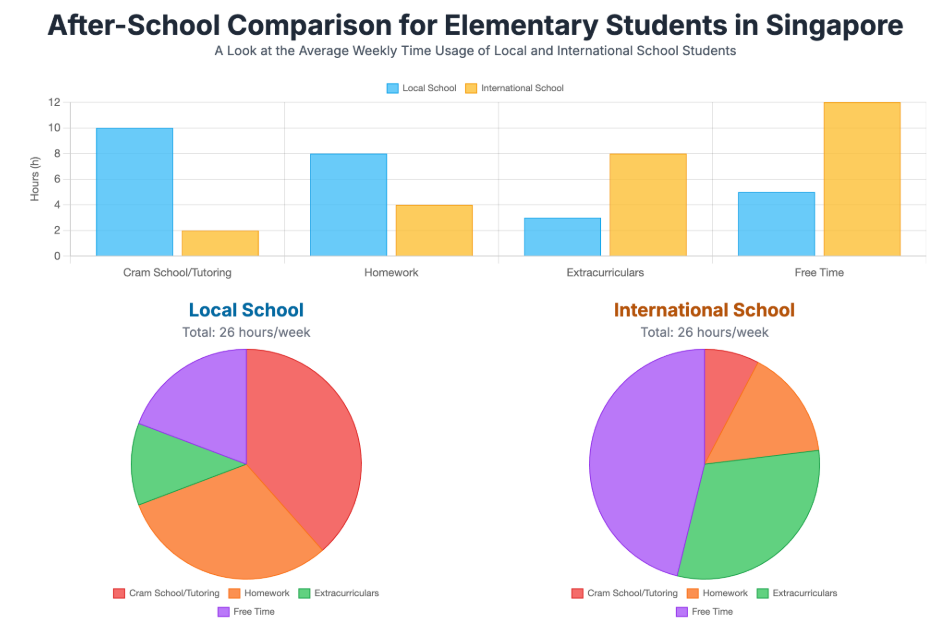
The high quality of education provided by Singapore’s local schools is widely acknowledged. However, many parents are increasingly concerned about the intense academic pressure placed on children from an early age—particularly through the PSLE (Primary School Leaving Examination) and similar competitive systems.
In an environment where scores and rankings are heavily emphasized, children often find themselves under constant pressure. Rather than experiencing the joy of learning, they may begin to develop a deep fear of making mistakes.
As someone who has worked closely with students in exam preparation, I have seen firsthand how prolonged exposure to such pressure can severely undermine a child’s self-esteem. For example, I once worked with a highly capable student who, after receiving lower-than-expected marks on a single test, completely lost confidence and began to lose motivation for studying altogether. In another case, a student became emotionally and physically exhausted from constantly being compared to others, eventually finding school itself to be a major source of stress.
What truly matters is not just test scores, but how we nurture a child’s individuality and natural curiosity—qualities that cannot be measured by exams alone. If your child feels stifled in their current learning environment, an international school—with its alternative approach to education—could be a powerful way to help them rediscover their confidence, enthusiasm, and true potential.
The Misconception That “International Schools Are Too Expensive” Could Be Limiting Your Options

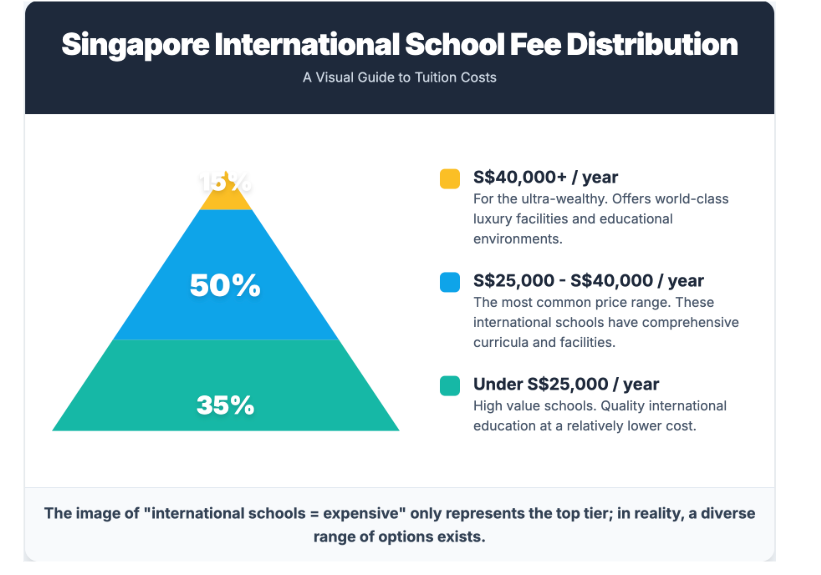
Many parents believe that “International schools cost over S$40,000 a year—they’re simply out of reach.” It’s a common perception, and not without reason. Some of the most well-known international schools in Singapore, often featured in the media, do indeed charge that level of tuition.
However, what many people don’t realize is that these schools represent only a small portion of the wide range of international schools available in Singapore. The belief that all international schools are prohibitively expensive may be unintentionally limiting your child’s opportunities from the very beginning.
In reality, there are several international schools in Singapore where the total annual cost is around S$20,000—schools that offer excellent value for money. So how are these schools able to keep costs lower? As an education consultant, I encourage parents to focus not just on what schools spend money on, but also on what they choose not to.
For instance, some schools avoid the high overhead costs of operating in prime city locations and instead run efficient campuses in more suburban areas—still offering all the facilities necessary for a rich education. Others may skip expensive marketing campaigns and instead grow their community through word-of-mouth and reputation.
Rather than assuming “more expensive means better” or “cheaper means lower quality,” why not take a step back and reconsider? By broadening your perspective and gathering the right information, you may discover a school that fits both your budget and your child’s unique potential.
Why Judging Schools by Tuition Alone Can Lead to Regret — What Truly Matters in Educational Investment

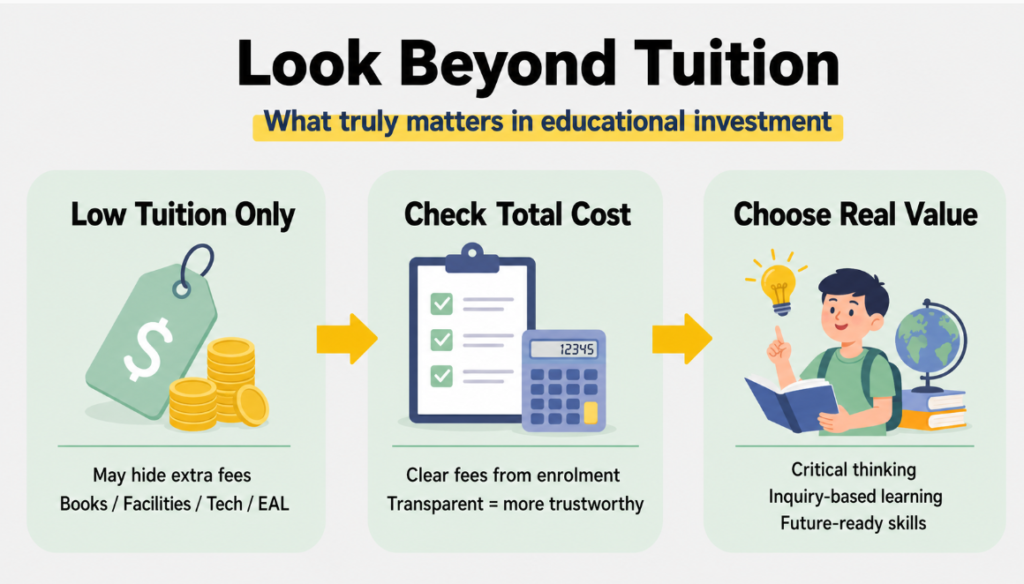
When choosing the right school for your child, it’s only natural that tuition fees play an important role in the decision-making process. However, making a choice based solely on low advertised tuition can often lead to disappointment later on. Education is not a mere “expense”; it’s one of the most significant investments you can make in shaping your child’s future. Focusing only on short-term savings may ultimately limit your child’s long-term potential.
As an expert in educational investment, I’d like to offer two essential pieces of advice:
First, always consider the total cost of ownership. Even if the base tuition appears low, many schools add additional fees for textbooks, facilities, technology, and support services such as English as an Additional Language (EAL). A school that clearly outlines the full cost from enrollment to graduation is demonstrating transparency and is more likely to be trustworthy.
Second, look beyond the numbers to evaluate the true value of education. For instance, inquiry-based learning models like the International Baccalaureate (IB) encourage students to ask questions, explore solutions, and develop critical thinking skills. These abilities are essential—not just for academic success, but for thriving in a rapidly changing, AI-driven world. Investing in this kind of “thinking power” could very well be the greatest gift you give your child, preparing them to succeed anywhere in the world.
Affordable Doesn’t Mean Low Quality — How to Find Schools That Balance Cost and Excellence

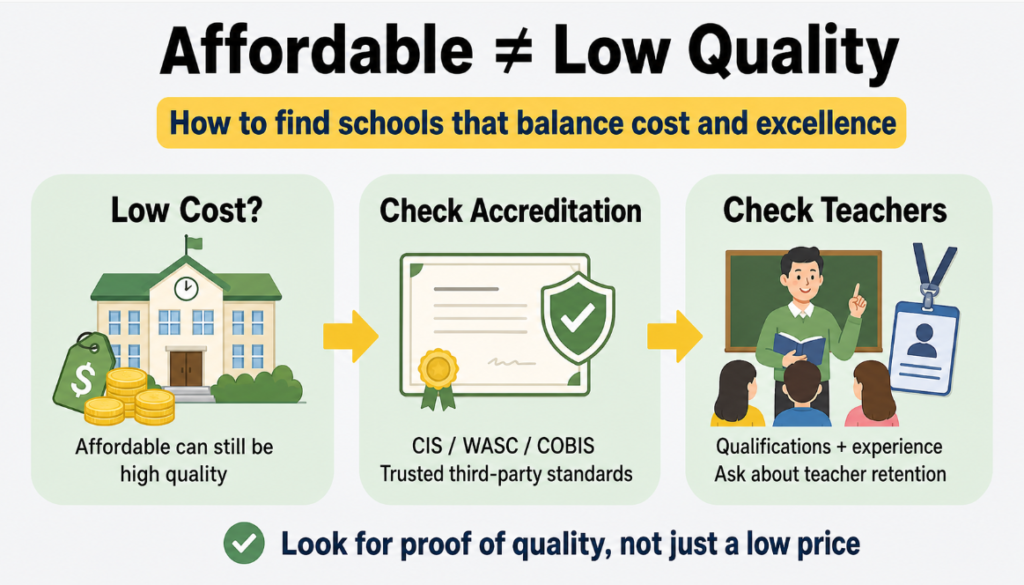
Many parents understandably worry that affordable international schools may come with a compromise in educational quality. It’s a common concern: “If the tuition is low, the quality must be too.” But in reality, this equation doesn’t always hold true. What truly matters is understanding why a school is able to keep costs down—and more importantly, whether it can still maintain high academic standards.
As an education consultant, I recommend focusing on two key areas when evaluating cost-effective international schools:
1. Check for accreditation by reputable international education bodies such as CIS (Council of International Schools), WASC (Western Association of Schools and Colleges), or COBIS (Council of British International Schools). These accreditations require schools to meet rigorous standards in curriculum design, teaching quality, student support, and governance. If a school holds such accreditation, it means a trusted third-party organization has verified the school’s educational standards.
2. Look closely at teacher quality and retention. Does the school publicly share information about its teachers’ qualifications—such as where they graduated from or whether they hold teaching credentials? How long, on average, do teachers stay at the school? High-quality education depends heavily on dedicated, experienced educators. A school with high staff turnover may be struggling with internal issues such as management or working conditions. Don’t hesitate to ask directly at school tours or information sessions: “What is the average teacher tenure here?”
By evaluating these two key points, you can make a well-informed, confident decision—and find a school that offers both value and quality for your child’s education.
[2025 Edition] Best Value International Schools in Singapore with Annual Total Fees Under SGD20,000
Is there really such a thing as a high-quality international school at an affordable price?” To answer that question, we’ve put together a concrete list of schools, along with detailed information on fees and curricula so you can assess the value for yourself. Based on the latest data for the 2025 academic year, this list focuses on international schools in Singapore where total annual costs are likely to stay under SGD20,000—schools that offer outstanding cost performance. Let this be the first step in turning your dream options into a real plan.
6 Best Value International Schools in Singapore to Check Out First

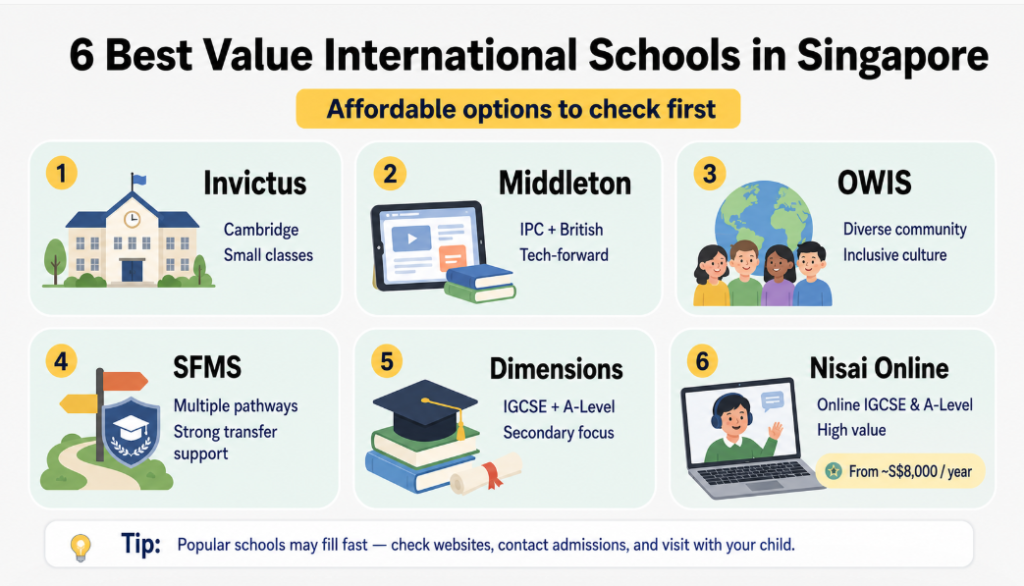
We have carefully selected six international schools that stand out for their excellent cost performance and strong reputations. Each of these schools offers unique strengths and characteristics. Start by checking this list to see if any of them might be a good fit for your child.
Invictus International School:
A small-scale school known for its warm, close-knit environment where each student receives personalized attention. It follows the Cambridge curriculum and is popular for its relatively affordable tuition fees.
Middleton International School (Tampines Campus):
Combining the International Primary Curriculum (IPC) with the British curriculum, Middleton offers quality education at an affordable price. It is particularly recognized for its proactive use of technology in teaching.
One World International School (OWIS):
OWIS emphasizes diversity, with a student body representing many nationalities. The school values kindness as a core principle and is favored by families seeking a warm, inclusive community. The Nanyang campus is an IB PYP candidate school that manages to keep costs reasonable.
St. Francis Methodist School (SFMS):
A hybrid between a local and international school, SFMS offers a variety of academic pathways, including Singapore’s GCE O- and A-Levels and Australia’s WACE university entrance qualifications. It has extensive experience supporting students transferring from local schools.
Dimensions High School:
Focused on secondary education and university preparation, this school offers rigorous Cambridge IGCSE and A-Level programs at highly competitive prices.
Nisai British International Online School (IGCSE, A-Level):
A fully online school that provides exceptional cost efficiency for IGCSE and A-Level studies. For example, three IGCSE subjects can be taken annually for about S$8,000, and three A-Level subjects for about S$8,800.
Expert advice: These schools are highly popular and may have long waiting lists. If you find a school that interests you, check their website promptly and contact the admissions office for up-to-date information. Finally, always make your decision after visiting the school and seeing the environment with your child’s own eyes.
More Than Just Tuition – What You Need to Know About Total School Costs Before Enrolment

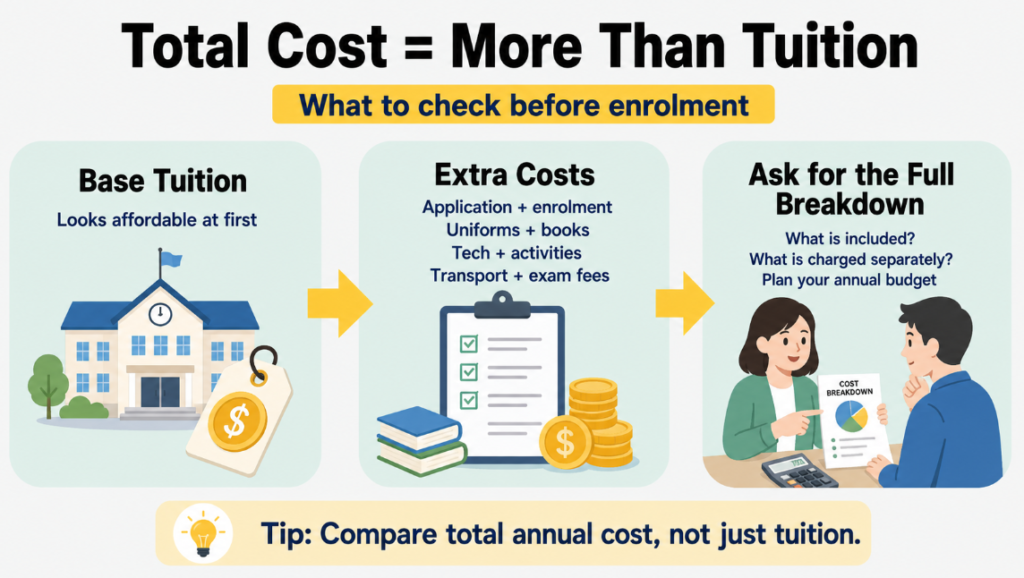
When considering international schools, it’s important to look beyond the advertised tuition fees. Many families are surprised by the range of additional costs that can add up over the course of the year. These may include:
- Application and enrolment fees
- Development or capital levies
- Uniforms and textbooks
- Technology fees
- Field trips and extracurricular activities
- Transportation
- Exam fees (e.g. IGCSE, IB, A-Level)
These fees vary significantly between schools, and some may not be included in the basic tuition quote. That’s why it’s crucial to request a full breakdown of annual costs when shortlisting schools.
Even among affordable international schools, the “total cost of attendance” can differ by thousands of dollars depending on your child’s grade level and specific needs. Make sure to read the fine print and, if possible, speak directly with the admissions team to understand the full picture.
As an expert tip: always confirm what is included in the tuition and what is charged separately. This will help you avoid surprises and better plan your budget for the year ahead.
Beyond Tuition – A Breakdown of Total School Costs You Should Know Before Enrolment

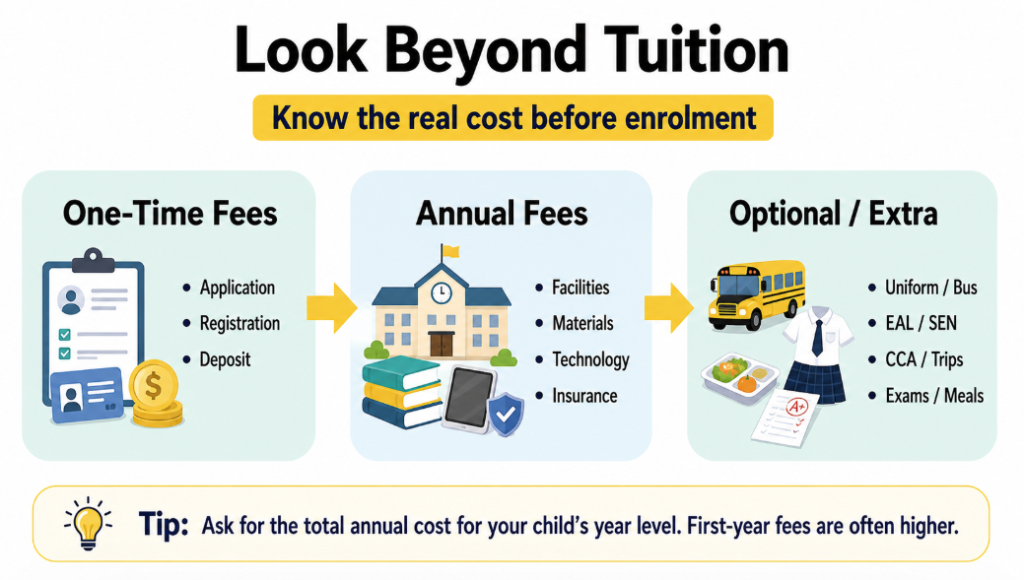
The tuition fee listed on a school’s website is often just one part of the total cost of education. To make an accurate financial plan, it’s essential to understand what additional costs may apply and compare schools based on total annual cost, not just tuition alone. Failing to do so can lead to unexpected expenses and budget overruns.
Here are some typical cost categories to consider:
One-Time Fees
- Application fee
- Enrolment/registration fee
- Security deposit (usually refundable upon graduation or withdrawal)
Annual Fees
- Facilities fee
- Learning materials and textbook fees
- Technology charges (e.g. iPad purchase, software subscriptions)
- Student insurance
Conditional/Optional Fees
- Uniforms
- School bus/transportation
- English as an Additional Language (EAL) support
- Special Educational Needs (SEN) services
- Co-curricular activities (CCA)
- External examination fees (e.g. IGCSE, IB)
- Excursions, school trips
- School meals/lunch programs
Expert Tip:
When contacting the admissions office, don’t hesitate to ask this simple but powerful question:
“Could you provide an estimate of the total annual cost for a Year 5 student, including all mandatory fees such as tuition, facility fees, and materials?”
This will help you uncover any hidden costs and plan more accurately.
Another important point: Be prepared for a higher cost in the first year. Initial fees like enrollment and deposits often make the first year more expensive than subsequent ones. It’s wise to build your financial plan with a buffer to avoid surprises.
IB, British, or American? A Comprehensive Comparison of School Curricula and Their Key Features

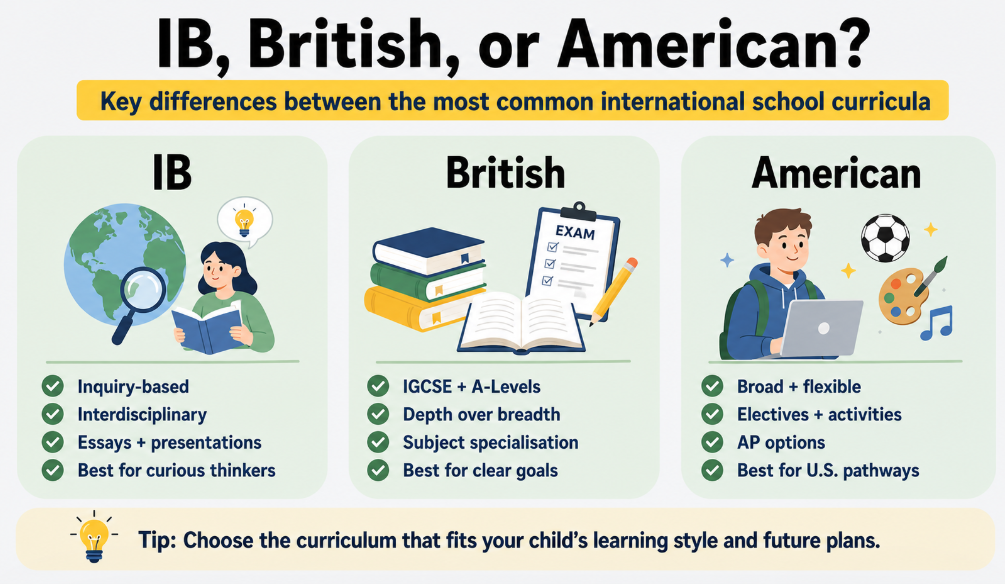
When choosing an international school, understanding the curriculum is absolutely essential. The educational path you choose can significantly affect your child’s learning style, assessment methods, and future academic opportunities. Below is a breakdown of the three most common international curricula, along with their key characteristics.
International Baccalaureate (IB)
The IB curriculum focuses on developing students’ ability to inquire, ask “why,” and take ownership of their learning. It promotes interdisciplinary learning, where subjects are often connected through real-world themes.
For example, students might study the global issue of “water scarcity” by combining scientific analysis in science class with the study of social impact in humanities. Research projects, presentations, and essays are core components of the program.
Best suited for: Students who are curious, reflective, and eager to build critical thinking and communication skills.
British Curriculum (Cambridge IGCSE & A-Levels)
This system emphasizes depth over breadth, encouraging students to specialize in areas of strength. Typically, students take the IGCSE exams in Year 11 and progress to A-Levels in Year 13, focusing on three to four subjects at an advanced level.
For instance, a student aiming for medical school may choose to study biology, chemistry, and mathematics intensively at A-Level, with the goal of achieving top scores.
Best suited for: Students with clear academic interests or career goals who want to dive deeply into specific subject areas.
American Curriculum (High School Diploma & AP)
The American system offers a broad and flexible approach. Students study a wide range of subjects and can tailor their schedule according to their interests. In addition to academics, extracurricular activities—such as sports, arts, and community service—are considered part of a student’s overall performance.
Advanced Placement (AP) courses allow students to take college-level classes during high school. High scores on AP exams can earn them university credits in many countries, especially in the U.S.
Expert tip: If your child is planning to apply to U.S. universities, this curriculum is a particularly strong choice.
School Location and Facilities – What Really Matters for Daily Commutes and Learning Environments

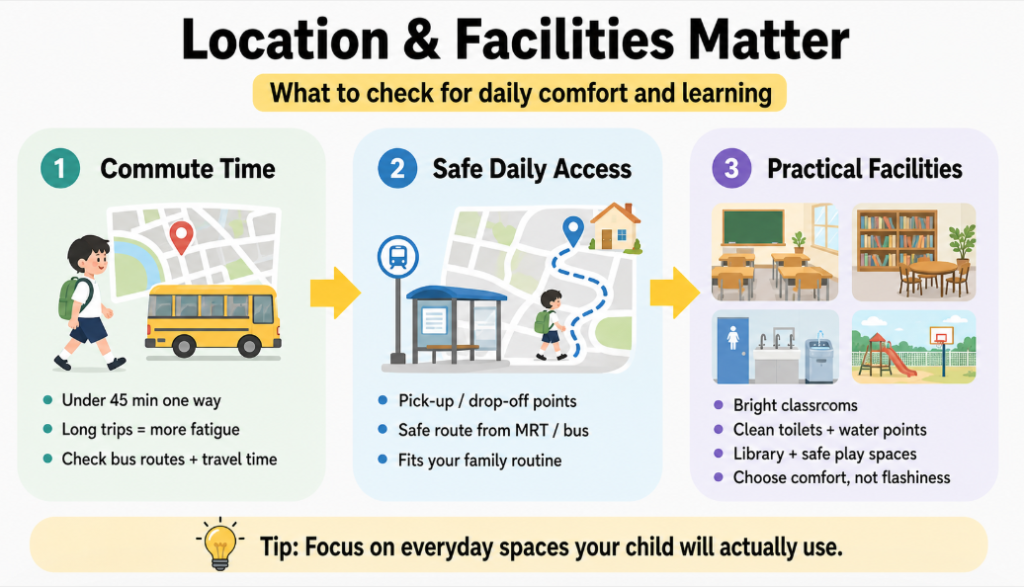
While curriculum and tuition are major factors in school selection, the location and facilities of a school play a critical role in your child’s everyday experience. No matter how excellent a school may be, if your child is exhausted from a long commute, their ability to focus and thrive will be compromised. And since students spend the majority of their day at school, the environment must be safe, comfortable, and supportive.
Let’s start with location.
Ideally, your child’s one-way commute should be under 45 minutes.
As an expert tip, long commute times—especially for younger students—can reduce sleep and lead to physical and emotional fatigue.
Before enrolling, be sure to:
- Confirm school bus routes, pick-up/drop-off points, and estimated travel times
- Check the distance and safety of walking routes from MRT or bus stations, if using public transportation
- Choose a school that fits your family’s daily routine and is realistically sustainable over the long term
Now, let’s talk about facilities.
It’s easy to be dazzled by Olympic-size swimming pools or state-of-the-art theatres—but those aren’t the most important features.
Instead, during a school tour, pay close attention to these “real-life” aspects:
- Library: Is it inviting and accessible? Are the books age-appropriate and well-curated?
- Restrooms and water fountains: Are they clean and well-maintained?
- Playgrounds and sports halls: Are there safe, open spaces where children can move freely and stay active?
- Classrooms: Are they bright, tidy, and conducive to focused learning?
Shiny facilities may look impressive, but what really matters is how well the everyday spaces—those your child will use daily—are cared for and managed. Prioritize practicality and comfort over flashiness.
Student Nationality Mix – The True Value of Diversity in International Schools

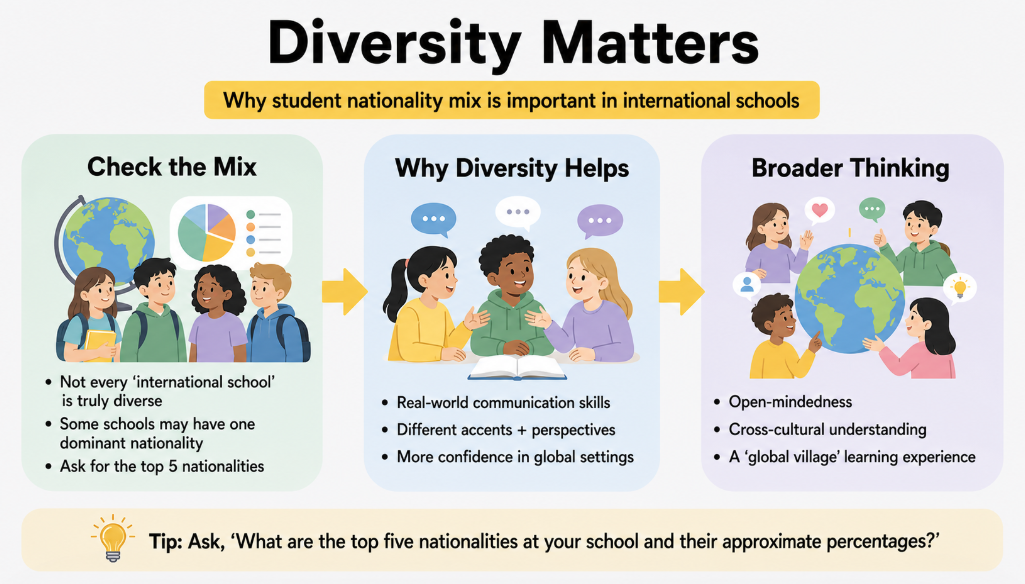
Just because a school is called an “international school” doesn’t always mean it offers a truly international environment. In some cases, over 80% of the student body may come from a single nationality. Yet, the diversity of student nationalities is one of the most crucial factors in helping your child develop intercultural understanding and a truly global perspective.
One of the greatest benefits of attending an international school is the opportunity to build friendships with classmates from a wide range of cultural and linguistic backgrounds.
So, what are the real benefits of diversity?
1. Real-world communication skills
Beyond classroom English, students gain exposure to different accents, expressions, and ways of speaking. This helps build confidence and adaptability in real-life communication—a valuable skill for future work and life in global settings.
2. Broader thinking and open-mindedness
Interacting with peers from different countries helps children break free from stereotypes and develop the ability to see issues from multiple perspectives. For example, in a history lesson, they may come to realize how one historical event can be interpreted differently depending on cultural or national viewpoints. They’ll also gain firsthand knowledge about other cultures, customs, and celebrations.
Expert Tip:
At school open days or information sessions, ask this specific question:
“Could you tell me the top five nationalities represented at your school and their approximate percentages?”
If a school is willing to share detailed data—or already displays it on their website—it often reflects a genuine commitment to diversity.
Consider giving your child the chance to learn in an environment that feels like a small, global village—a place where diversity is not just a number, but a daily lived experience.
The Secrets to Choosing the Right School: 3 Steps to Balance Cost and Quality
So far, we’ve explored the appeal of international schools and shared detailed information about specific institutions. However, some parents may be thinking, “There’s so much information out there—I don’t know where to start.” Don’t worry. In this section, we’ll introduce three simple yet effective steps that will help you cut through the noise and find the right answer for your family. By following this process, you’ll be able to strike a balance between affordability and quality—and make a choice you won’t regret.
Step 1 – Identify the “Reason for Affordability” Through Smart Research

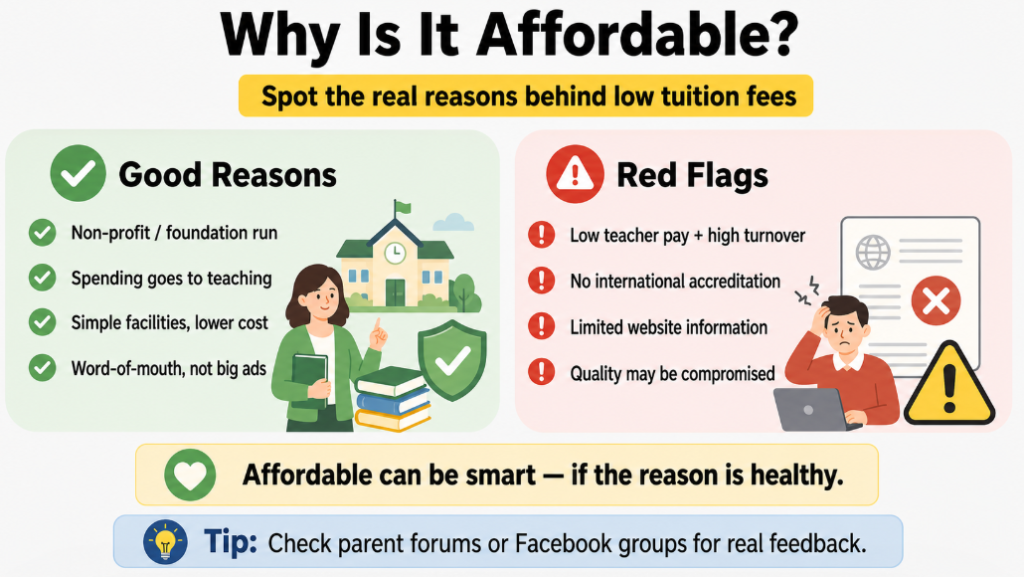
This visual encourages parents to distinguish between healthy reasons for lower tuition and risk factors that could compromise quality.
The first step in school selection is digging into why tuition fees are relatively affordable. While cost-effectiveness is appealing, the underlying reason can either be a positive effort to reduce waste—or a warning sign of compromised quality.
Positive reasons may include:
- Keeping facilities simple (no luxury swimming pools or theaters) to reduce costs
- Depending on parent recommendations instead of running expensive ad campaigns
- Being run by a foundation or other non-profit organization
These are all healthy, sustainable ways to keep costs down without sacrificing education quality.
On the other hand, there are cautionary reasons: schools that keep tuition low by underpaying teachers, hiring fewer qualified educators, or avoiding the investment required for international accreditation. These directly affect educational outcomes.
Pro Tip: Once you’ve found a school you’re interested in, check online parent forums or Facebook groups to see what real parents are saying. Comments like “We didn’t expect so many extra fees” or “The teachers are incredibly supportive” provide valuable insights you won’t find on an official website.
Step 2 – Confirm Quality with International Accreditation

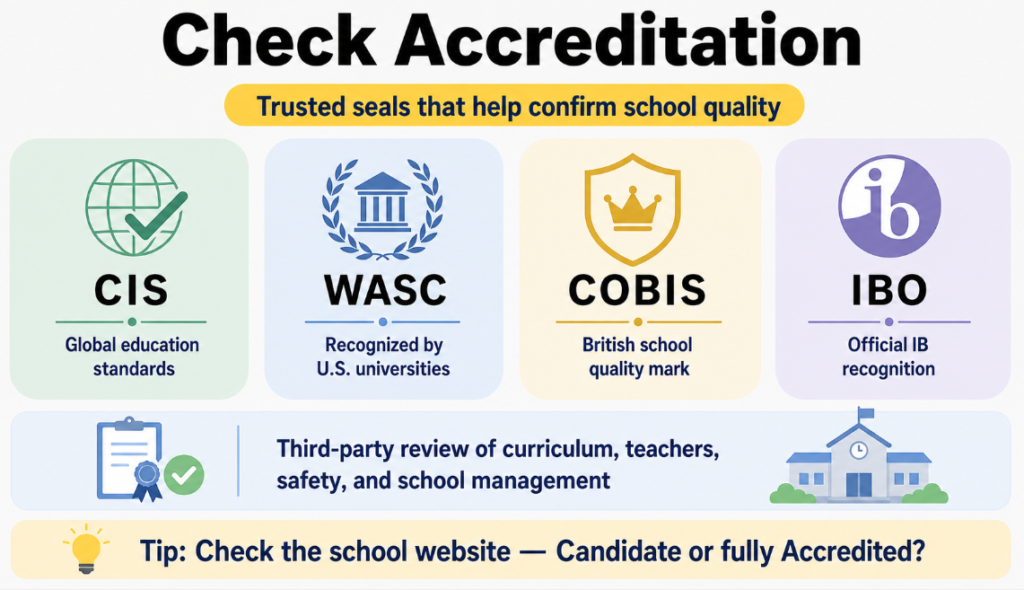
Accreditation is one of the most reliable indicators of quality because it involves rigorous third-party evaluation—not just the school claiming excellence. Agencies assess curriculum, teacher qualifications, student safety, and overall school management.
In Singapore, some of the most common accreditation bodies include CIS, WASC, COBIS, and IBO. Schools with these accreditations demonstrate a commitment to high standards and continuous improvement.
Pro Tip: Always check the school’s website for these logos (often at the bottom of the homepage or in the “About Us” section). Pay attention to whether the school is a Candidate or fully Accredited. Candidate status shows the school is working toward accreditation, while full accreditation reflects a well-established, high-quality system. If in doubt, ask during an open house: “Which international accreditations does your school hold?”
Step 3 – Narrow Down Choices with School Visits and Open Houses

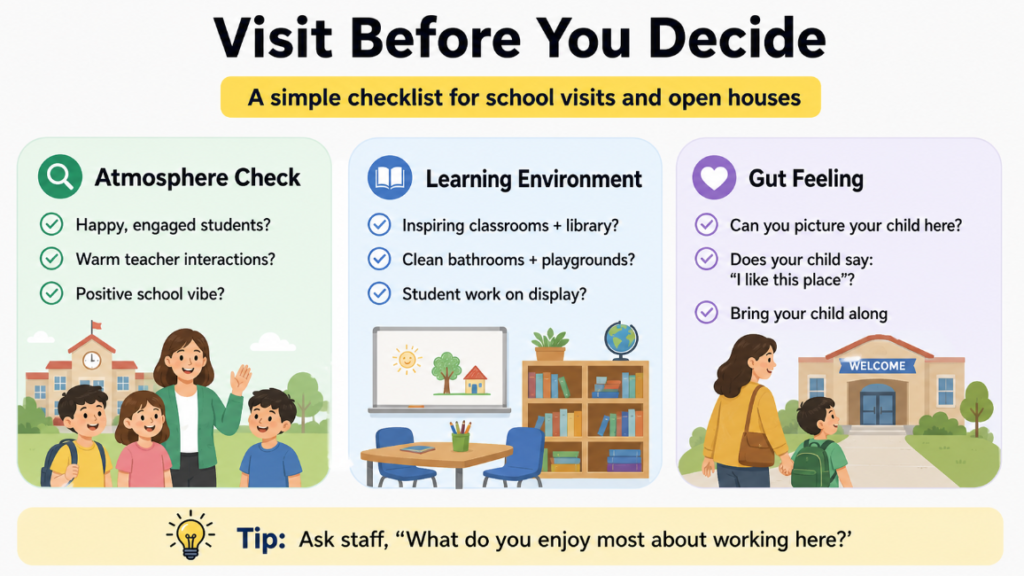
Once you’ve narrowed your options to 2–3 schools, the final step is visiting in person. Websites and brochures show the ideal version of a school, but open houses and tours reveal its true character.
During your visit, observe students’ expressions, teacher-student interactions, the principal’s passion for education, and even the work displayed on bulletin boards.
Pro Tip (most important): Always bring your child along. Parents may logically conclude a school is “great,” but if your child feels uncomfortable with the atmosphere, it won’t be the right fit. Afterward, gently ask: “Did you like it? Did it feel fun?” Your child’s honest reaction is a crucial factor.
Another insider question to ask staff is: “What do you personally enjoy most about working at this school?” Their answers will give you a glimpse into teacher satisfaction and the school’s culture.
A New Option – Affordable Cambridge Curriculum with Nisai Online School

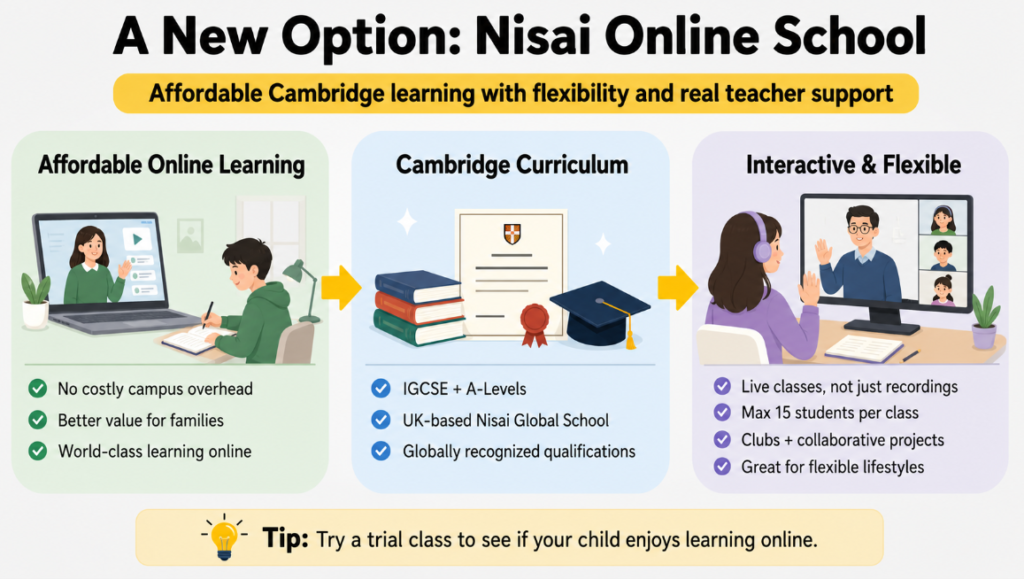
Online international schools are reshaping the landscape by removing the need for costly campuses—passing those savings directly to families while still delivering world-class education.
A leading example is Nisai Global School, headquartered in the UK. Nisai offers the prestigious Cambridge curriculum (IGCSE, A-Levels) entirely online, with globally recognized qualifications upon graduation.
Unlike pre-recorded lectures, classes are interactive and capped at 15 students, allowing real-time discussion and teacher support.
Pro Tip: Online schooling is particularly suitable for self-motivated students, aspiring athletes, or children dedicated to the arts who need flexibility. While some parents worry about social development, Nisai provides online clubs and collaborative projects. Combined with local activities, students can balance academics and social skills. Start by trying a trial class to see if your child enjoys learning online.
How the Right School Choice Shapes Your Child’s Smile and Your Family’s Future
The right school does more than provide a good education—it nurtures your child’s happiness and enriches family life as a whole. Optimizing education costs creates financial breathing room, while diverse learning environments foster personal growth that money alone can’t buy.
How Smarter Spending Creates a “Happy Cycle” for Families

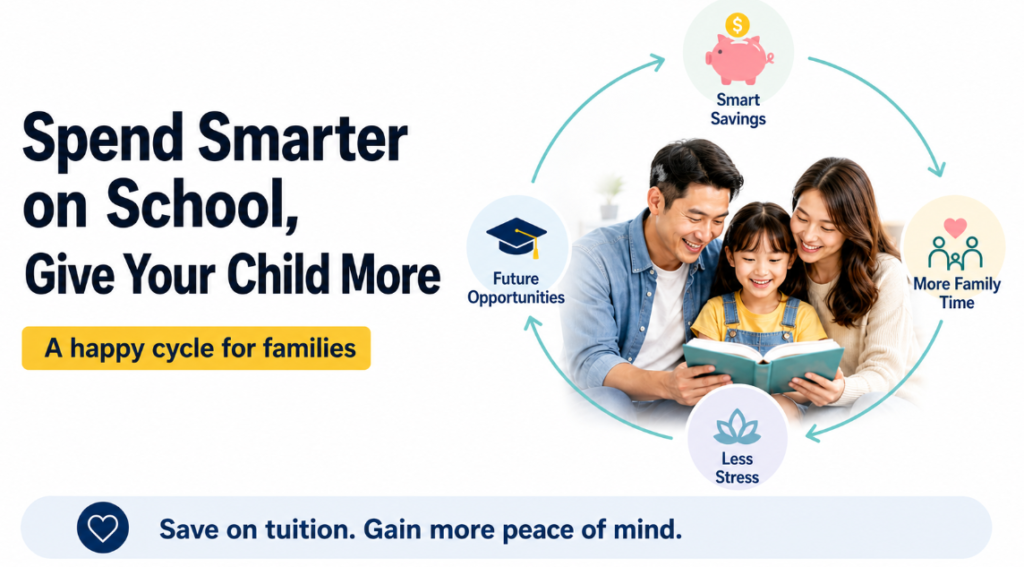
It’s natural to think, “I’ll spend whatever it takes for my child’s education.” But if school fees drain the family budget and limit other meaningful experiences, is that really best for your child?
Saving, say, S$15,000 annually could mean more family travel, extracurricular lessons in your child’s passions, or future university savings—all of which reduce stress and increase family happiness.
Pro Tip: Don’t treat tuition as untouchable. Consider it within the balance of your overall household budget. The joy, enrichment, and peace of mind gained through smarter spending can be just as valuable for your child’s development as the most expensive facilities.
Building Confidence and Global Communication Skill

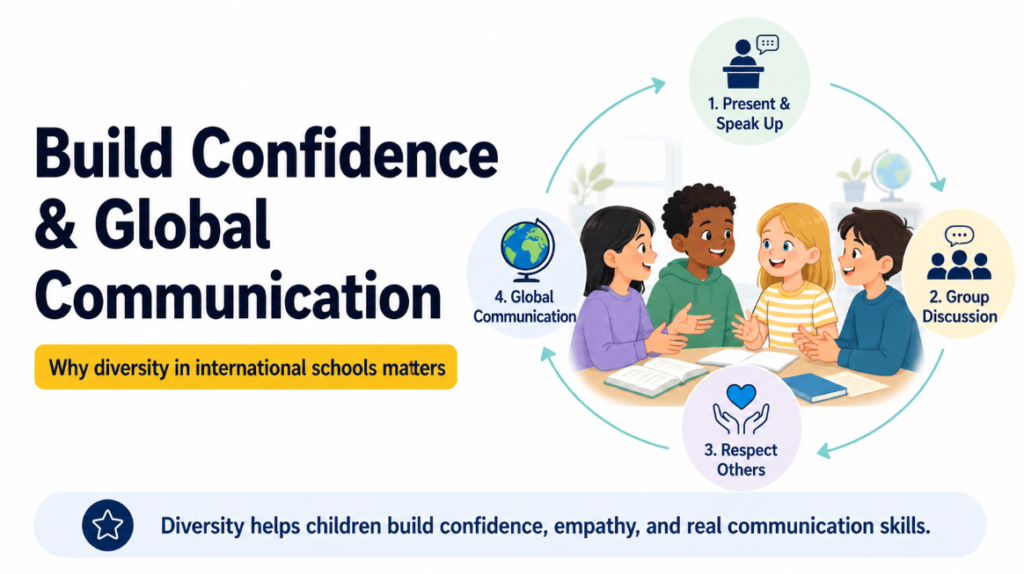
The diversity found in international schools is priceless. Sharing daily life with peers from different cultures builds empathy, confidence, and true communication skills—not just test scores.
From early grades, students often present in front of peers, participate in group discussions, and learn to express themselves openly. This cultivates self-esteem and the ability to respect and collaborate with others—skills AI could never replicate.
Unlocking Global University Pathways

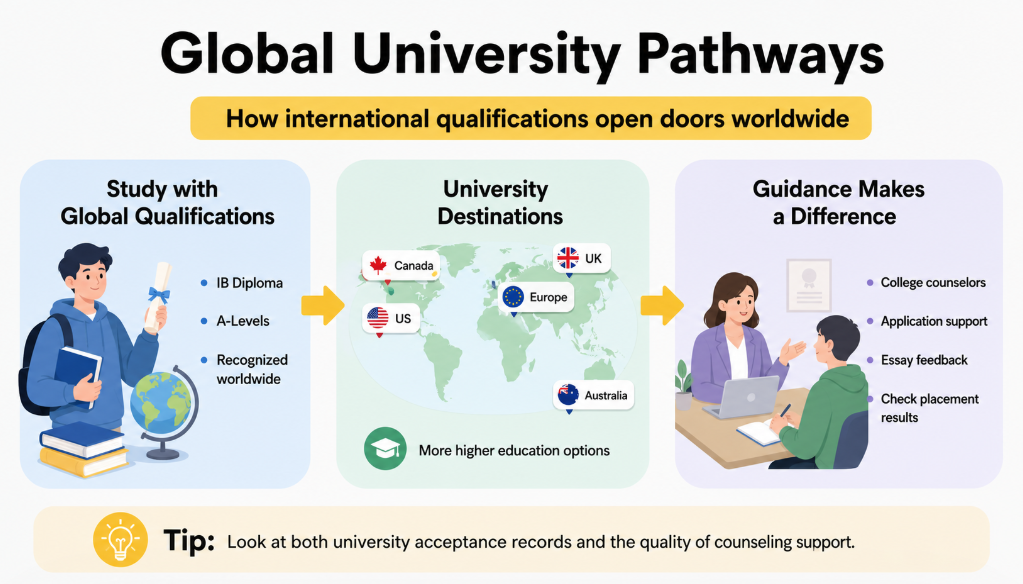
Choosing an international school expands your child’s higher education options from Singapore to the world. Graduation qualifications (IB, A-Levels, etc.) are accepted globally, opening doors to universities in the UK, US, Canada, Australia, Europe, and beyond.
- IB Diploma: Highly valued worldwide, especially by US liberal arts colleges and European universities
- A-Levels: Trusted across the UK and Commonwealth countries, excellent for demonstrating subject mastery
Pro Tip: Many schools employ dedicated college counselors who understand global admissions. They provide personalized strategies, essay feedback, and application support—helping even affordable schools send students to top universities.
When considering schools, always check the track record of university acceptances and the quality of their guidance services.
Conclusion
Parents in Singapore often assume international schools are “too expensive.” But as we’ve shown, there are affordable schools that balance cost and quality exceptionally well.
The key is to:
- Investigate why tuition is low
- Check for international accreditation
- Visit schools in person with your child
Following these three steps ensures a confident, regret-free decision.
The right choice will relieve academic pressure, nurture your child’s joy of learning, and free up family resources to create lasting memories. This is the greatest gift you can give—to your child and to your family’s future.
Take the first step today: open a school website together with your child, and start exploring.